
AI and Christian Music: When Technology Can Create the Song, What Happens to the Soul?
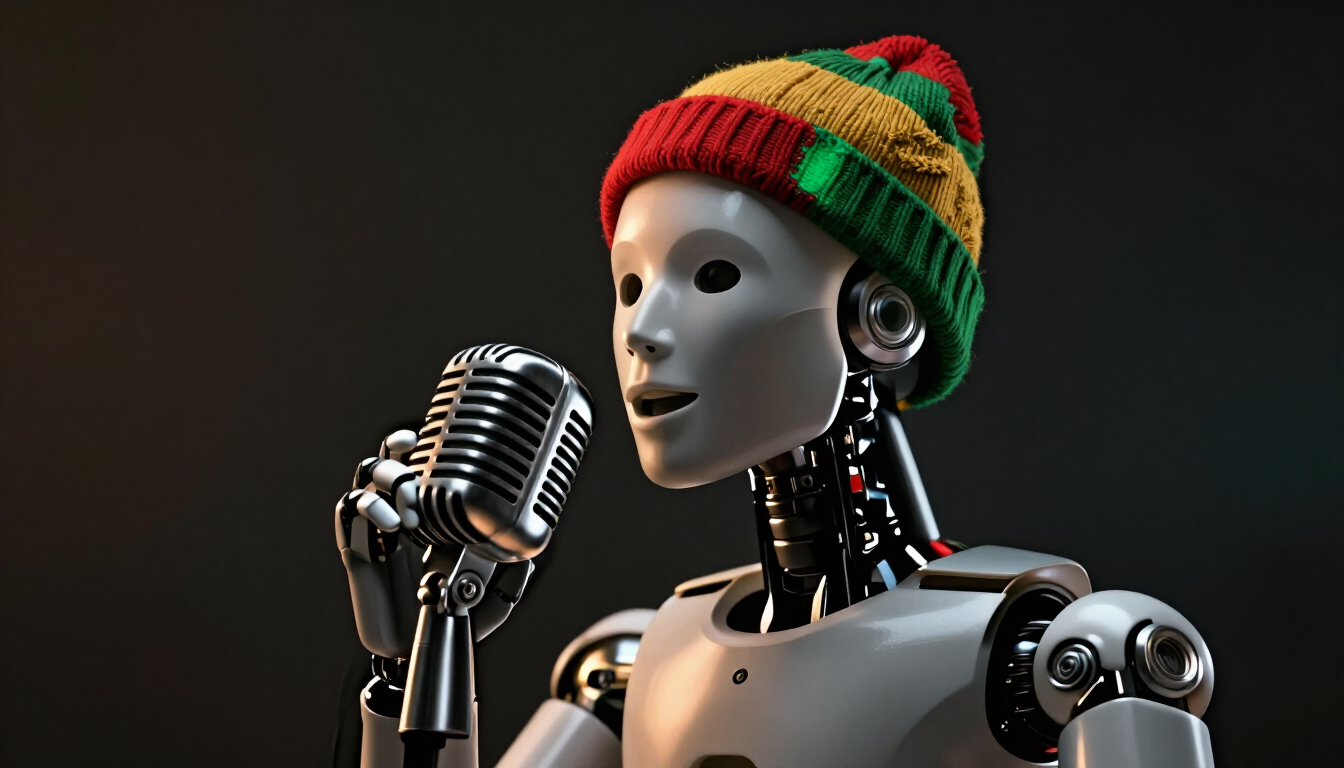
A Creative Revolution We Cannot Ignore
Every generation of musicians has witnessed technological change. From multitrack recording and synthesisers to drum machines, sampling and digital recording software, technology has continually transformed how music is written, produced and distributed.
Many of these developments were initially met with suspicion. Some feared that drum machines would replace drummers, synthesisers would make musicians redundant, and home studios would undermine professional recording facilities. Yet technology also levelled the playing field, giving independent artists access to tools previously reserved for those with substantial budgets and professional studio facilities. Talented musicians who might otherwise have remained unheard suddenly had opportunities to create and share their music.
Artificial intelligence represents another extraordinary development in this journey, but there is an important distinction. Previous technologies largely helped musicians make music. Generative AI can now make music that sounds as though musicians created and performed it, even when they haven’t.
For Christian music, where testimony, authenticity and spiritual expression are central to much of what we do, this distinction changes the conversation. The implications deserve serious consideration, not simply because of what AI can produce, but because of what it might eventually replace.
AI: A Tool, a Collaborator or a Replacement?
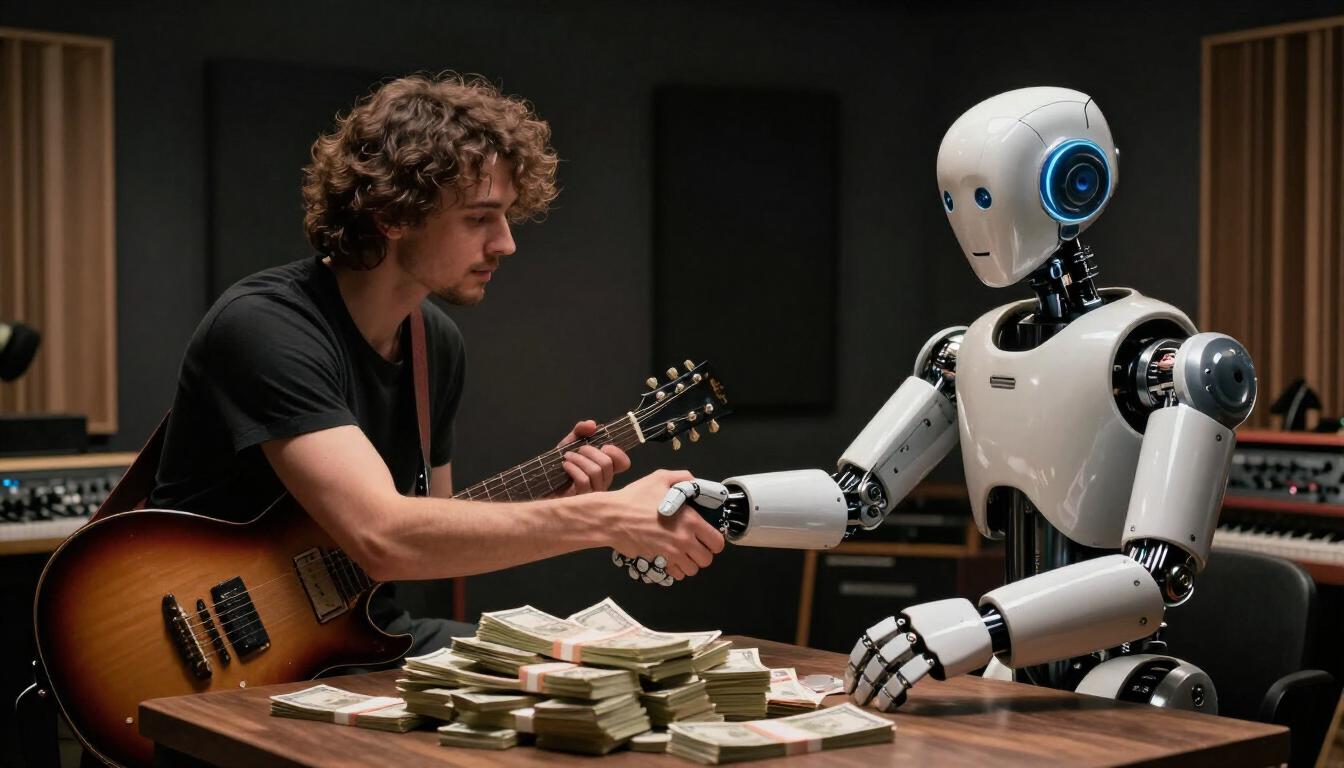
Artificial intelligence is already being used at virtually every level of music production, including by established producers and industry professionals. From vocal processing, mixing and mastering to songwriting, arrangement and complete musical generation, AI is becoming part of the creative process. Platforms such as Suno have accelerated this development, enabling users to generate remarkably convincing recordings from relatively simple instructions.
For independent Christian artists, the opportunities are significant. A songwriter with limited financial resources can explore arrangements that would previously have required expensive studio sessions. A producer can experiment with unfamiliar musical styles, while someone with a meaningful message but limited technical ability can bring an idea closer to a finished recording. AI can save time, inspire new approaches and help artists overcome practical limitations.
For many Christian creators, whose motivation is not primarily financial but a desire to produce music that encourages and blesses people, these tools can be genuinely valuable. There is also something to be said for the satisfaction of taking an original composition or unfinished demo and developing it into a recording that communicates its intended message as effectively as possible. However, the convenience of AI can come at a cost. The creative interaction between musicians, the exchange of ideas in a studio and the unexpected inspiration that emerges from human collaboration are experiences that technology cannot fully replicate.
Not all AI-assisted music is created in the same way. There is a considerable difference between using AI to enhance an existing human performance, developing an original demo with AI assistance, and generating an entire recording — lyrics, instrumentation and vocals — from a written prompt. All three may result in music that listeners enjoy, but should we regard them as equivalent creative achievements? Should audiences be entitled to know the difference?
Perhaps the most important question is not simply whether AI was used, but what the human creator actually contributed.
The Drum Machine Argument Only Goes So Far
Whenever concerns about AI music are raised, someone inevitably points to earlier technological developments. Didn’t musicians once fear drum machines? Wasn’t sampling controversial? Haven’t producers always used technology to create sounds that would otherwise be impossible? These comparisons are understandable, but they overlook something fundamental.
A drum machine does not require access to millions of existing commercial recordings to produce a rhythm. Generative AI systems, by contrast, are developed using enormous quantities of data. The training of music-generation systems has raised serious questions about whether copyrighted recordings and compositions have been used without permission.
These are not merely theoretical concerns. Major record companies have pursued copyright litigation against AI music companies, including Suno and Udio, alleging unauthorised use of protected recordings. In July 2026, a German court also ruled against Suno in a copyright dispute brought by the music rights organisation GEMA. The legal landscape remains contested, with litigation, appeals, licensing agreements and settlements developing across different jurisdictions.
Music law has adapted to technological change before. Sampling eventually required a more established framework for permissions, licensing and compensation. Generative AI may demand an equally significant response, although the underlying technology and legal questions are different.
The central issue is straightforward: if AI companies build commercially valuable systems using the creative work of human musicians, should those musicians have a say in how their work is used, and should they receive compensation?
For Christian artists, this question is not simply about copyright law. It is also about fairness. Scripture reminds us that the worker deserves their wages (1 Timothy 5:18). If we believe that creative gifts have value, we should be concerned when technology potentially benefits from years of human effort without appropriate recognition or reward. This does not necessarily mean rejecting AI, but it should mean demanding transparency, responsible training practices and fair treatment of the people whose creativity helps make these technologies possible.
When the Artist Isn’t Real: The Xania Monet Question
Perhaps one of the most fascinating developments in AI music is the emergence of entirely virtual recording artists. These are not simply songs produced with artificial intelligence, but artist identities complete with names, images, biographies, social media presence and carefully developed personalities.
One particularly relevant example is Xania Monet, an AI-generated artist who has attracted significant attention, including success on Gospel music charts. Behind Xania Monet is a real human creator, Telisha “Nikki” Jones, who writes lyrics inspired by human experiences. AI technology is then used to generate the musical performances.
This is an important distinction. The lyrics are not necessarily machine-written, and the emotions expressed may originate from genuine human experiences. Nevertheless, the singer presented to the public is not a human performer. This raises an intriguing question: when listeners connect emotionally with an AI artist, who, or what, are they actually connecting with? Is it the human songwriter behind the lyrics, the artificial voice delivering them, the carefully constructed artist identity, or the assumption that the person they see and hear has personally lived through the experiences being expressed?
For Christian music, the implications become particularly sensitive. Imagine a completely fictional Gospel artist whose biography describes overcoming addiction, experiencing miraculous healing or encountering Christ during a personal crisis. Imagine that artist sharing testimonies, appearing in AI-generated interviews and developing a substantial following. The songs might contain sound biblical teaching, the production might be outstanding, and listeners might even be genuinely encouraged. But what happens when the testimony belongs to someone who has never existed?
There is a significant difference between an openly fictional character used to communicate truth and an artificial personality deliberately presented as a real human being. Christian music should never need to manufacture a testimony to make its message convincing. That does not automatically invalidate virtual artists as a creative concept, but it does place a responsibility on their creators to be truthful about who, or what, audiences are engaging with.
Can AI-Generated Music Still Bless People?
This is where the debate becomes less straightforward. Suppose someone grieving the loss of a loved one hears an AI-generated Gospel song about God’s faithfulness and finds genuine comfort. Does the technology used to create the recording invalidate that experience? Not necessarily.
Truth does not become false simply because it is communicated through technology. A Scripture verse displayed on a screen remains Scripture, and a biblical message read by a synthetic voice can still communicate truth. Likewise, a recording made with AI assistance may contain genuine human faith, intention and creativity. We should be careful not to confuse the spiritual value of a message with the technical process through which it was produced.
However, there remains an important distinction between communicating truth and representing personal experience. An AI voice can sing convincingly about redemption, but it has never personally experienced forgiveness. It can generate emotional lyrics about suffering without having endured hardship, and it can perform a moving Gospel song about the presence of God without possessing a personal spiritual testimony.
For Christians, worship is not merely the production of religious-sounding music. It is fundamentally a human response to God. This does not mean AI-assisted music cannot encourage worship, but it does mean we should distinguish between music that helps people worship and the personal act of worship itself.
The question is not whether God can use music created with AI. It is whether we are being truthful about the source, experience and intention behind that music.
The Coming Age of Personalised Artists
We may only be witnessing the beginning of a much larger transformation. Imagine a future in which listeners no longer need to discover new artists because they can simply create them. A listener could specify a vocal style, musical genre, lyrical theme, emotional atmosphere and even the personality of a digital performer. The result could be an entirely personalised Gospel artist, producing songs tailored to one individual’s tastes.
Want a contemporary worship song about overcoming anxiety, performed by a soulful female vocalist? Or a traditional Gospel choir singing about God’s promises, arranged in the style of a particular musical era? Such music could increasingly be generated in seconds. Listeners might even create virtual artists who release new music every day, never cancel a performance and consistently produce exactly the sound they enjoy.
But what happens when music becomes unlimited, immediate and almost entirely personalised? Will listeners still value the stories behind songs, or care about the musicians who spent years developing their craft? Will they continue supporting artists financially when a seemingly endless supply of music can be generated at minimal cost? And what happens to the shared cultural experiences that connect generations through particular songs and artists?
Perhaps the greatest danger is not that AI will create poor-quality music, but that it will produce so much convincing music that we stop asking who created it, why they created it and whether their story is real.
The Human Soul Cannot Be Reduced to an Algorithm
Music has always been more than notes, rhythms and frequencies. It carries memories, relationships, cultural identity, personal struggles and shared experiences. Consider the Gospel songs that sustained communities through hardship, brought encouragement during bereavement or inspired people to persevere in faith. Their significance extends far beyond musical structure because they connect us to people, their stories, their experiences and the circumstances in which those songs were written and performed.
AI can analyse musical patterns and reproduce styles with remarkable sophistication, but it does not possess a human life, a spiritual history or a personal relationship with God. It can simulate emotion without experiencing it, generate lyrics about forgiveness without having forgiven anyone, and sing about the Cross without knowing what it means to be redeemed.
From a Christian perspective, human creativity is connected to something deeper than technical ability. Genesis 1:27 teaches that humanity is created in the image of God. Our capacity for imagination, relationship, moral responsibility and meaningful expression is part of what makes us human.
This does not mean every human recording will sound better than an AI-generated production. Indeed, AI may increasingly outperform many human creators in technical polish, consistency and speed. But technical excellence is not the only measure of artistic value. The creative spark may be imitated, packaged and commercialised, but the human experience behind genuine artistic expression cannot simply be manufactured.
For centuries, people have attempted to capture, package and sell creativity. AI may represent the most sophisticated attempt yet, but human beings will always need other human beings. We need friendship, companionship, encouragement, brotherhood, shared stories and genuine relationships. Music remains one of the most powerful ways those connections are expressed.
Truth, Deception and the Age of Artificial Reality
The speed of AI development presents another challenge. Technology appears to be advancing faster than legislation, ethical debate and public understanding. We witnessed something similar with social media, where platforms transformed communication and society long before we fully understood their consequences.
AI now makes the distinction between authentic and manufactured content increasingly difficult. Voices can be cloned, images generated, personalities invented and videos created to portray events that never happened. Music can sound as though it was performed by a real artist who has never existed.
For Christians, this should prompt serious reflection. Scripture warns about deception and the importance of spiritual discernment. Second Thessalonians 2:9–12 speaks of deception and delusion, while 1 John 4:1 encourages believers to test what they encounter rather than accept everything unquestioningly.
We should avoid automatically identifying a particular technology with the fulfilment of biblical prophecy. Nevertheless, the underlying principle remains relevant. In a world where almost anything can be convincingly manufactured, truth becomes increasingly precious.
This places an even greater premium on authentic relationships, genuine Christian fellowship and in-person worship. Hebrews 10:25 encourages believers not to neglect meeting together. There is something irreplaceable about people worshipping together, encouraging one another, praying for each other and sharing their experiences of faith.
An AI-generated worship leader may deliver every note perfectly, but it cannot pastor a congregation, offer genuine companionship, share a personal testimony or walk alongside someone through the difficulties of life. Technology can support ministry, but it should never become a substitute for the human relationships at its heart.
AI Detection: Another Problem in the Making?
As AI-generated music becomes more convincing, another industry has begun developing around identifying it. AI detection services claim to analyse recordings and determine whether artificial intelligence was involved in their creation. At the same time, tools are being marketed to make AI-generated material harder to detect.
This creates a difficult situation. On one hand, artists who deliberately conceal substantial AI involvement may undermine the trust of their audiences. On the other, AI detection systems are not infallible. There have already been reports of musicians disputing decisions that classified or removed their recordings as AI-generated. A recording’s sound alone cannot always establish how it was created.
This is particularly problematic when AI-assisted tools are increasingly incorporated into conventional production software. Should an artist be labelled as AI-generated because they used an intelligent mastering plugin? What about vocal correction, stem separation or AI-assisted mixing? And what about an original human composition whose arrangement was developed using generative AI? There are meaningful differences between these practices, and any responsible approach to AI disclosure must recognise them.
Transparency should be encouraged, but artists should not be unfairly accused or penalised simply because their music sounds as though AI might have been involved. This is why honest disclosure by creators may ultimately be more valuable than relying entirely on automated detection systems.
GTracks.net: Supporting Artists Through Transparency
At GTracks.net, our mission is to champion Gospel and Christian music creators and encourage listeners to support them directly. We believe artists deserve a fairer return for their work and greater opportunities to sustain their creativity. In an industry increasingly dominated by streaming platforms, algorithms and now AI-generated content, supporting genuine creators is more important than ever.
We also recognise that AI is becoming a legitimate part of many artists’ creative workflows. Our position is not that every use of AI should automatically disqualify music from being recognised or enjoyed. Rather, we believe that honesty, transparency and informed choice should be central to how Christian music is presented and supported.
That is why, as part of the updated GTracks.net platform, artists will be asked to declare whether artificial intelligence has been used in the creation of their music. This is an important step towards greater transparency. It is not intended to condemn artists who use AI responsibly or to suggest that every AI-assisted recording is somehow less worthy. Instead, it recognises that listeners should have meaningful information about the music they are choosing to support.
There is a difference between a human artist using AI as a production tool and a completely AI-generated recording presented under a fictional artist identity. We believe that distinction matters, and our approach is built around three principles: transparency about the involvement of AI, fairness towards human songwriters and performers, and the freedom for listeners to make informed purchasing decisions.
We recognise that these issues are still evolving and that there may not yet be perfect definitions or simple answers for every production scenario. However, asking the question is an important starting point. Our goal is not to become the technology police, but to help build a Christian music community where creativity is encouraged, integrity is valued and listeners can support artists with confidence.
Supporting Gospel music should mean more than simply consuming another recording. It should also mean valuing the people, creativity and commitment behind it.
The Future Is Not Simply Human Versus Machine
Artificial intelligence is not going away. Its capabilities will continue to improve, and its influence on music production will almost certainly increase. Some Christian artists will embrace it enthusiastically, others will reject it completely, and many will find themselves somewhere in between, using AI selectively while retaining substantial human involvement in their music.
These different approaches deserve thoughtful discussion rather than immediate condemnation. Nevertheless, there are questions the Christian music community cannot afford to ignore. Who owns the creative work used to train AI systems? Should virtual Gospel artists be presented as real people? Does a manufactured testimony cross an ethical line? How do we protect human creators from unfair competition while allowing responsible technological innovation? And how do we preserve the relationships and spiritual authenticity that give Gospel music its distinctive purpose?
Perhaps the greatest mistake would be to reduce this entire debate to whether AI can create music as convincingly as human beings. It increasingly can. The more important question is whether technological efficiency should become the ultimate measure of creative value.
There is a reason we value hearing an artist’s story, a reason live performance remains meaningful, and a reason a song written out of genuine hardship, gratitude or personal faith can connect with us in ways that go beyond the quality of the recording.
We are not simply consuming sound. We are connecting with humanity. And in Christian music, we are often connecting with someone’s expression of faith.
AI may be able to create the song. But can it ever replace the soul behind the song?
That is a conversation worth having.
Gtracks.net — Supporting Gospel Artists. One Download at a Time.
Editor’s Note: Further Reading
The debate surrounding artificial intelligence and Christian music is developing rapidly, with important questions about artistic authenticity, copyright ownership and fair compensation still being addressed.
For readers wishing to explore these issues further, the following reports provide useful background.
- CBS News — Meet the Woman Behind Chart-Topping AI Artist Xania Monet: An interview exploring the human creator behind the virtual artist Xania Monet and the questions raised by AI-generated performers.
- Deutsche Welle — German Court Rules AI Music Firm Violated Copyrights: Reporting on the July 2026 ruling in a copyright dispute between GEMA and Suno.
- Recording Industry Association of America — Copyright Cases Against Suno and Udio: Background on the lawsuits filed by major record companies in June 2024, alleging unauthorised use of copyrighted recordings to train AI music systems.
- GTracks.net encourages informed discussion and responsible innovation while remaining committed to supporting Gospel artists, protecting human creativity and promoting transparency.
Join the Conversation
At Gtracks.net, we want to hear from Christian artists, producers, worship leaders and music lovers.
Technology will continue to change how music is made. The values we choose to protect will determine what kind of music industry we create.
We welcome your thoughts. Whether you embrace AI, remain cautious or reject it altogether, we believe this conversation is too important to ignore.
- Should AI-generated Christian music be clearly identified?
- Where should we draw the line between AI-assisted production and entirely AI-generated music?
- Would you support a virtual Gospel artist if you knew the singer wasn’t real?
- Is it ethical to create an artificial artist with a fictional Christian testimony?
- Should musicians be compensated when their recordings are used to train AI systems?
- Can AI-generated music genuinely contribute to Christian worship?
- Would knowing that a recording was created entirely by AI affect your decision to purchase it?
“Where the Artist Gets the Lion’s Share”
Join the Revolution. Keep Gospel music alive.
Artists receive 80% of all revenue collected from their music on Gtracks. Buy direct, sustain a ministry, and turn the tide for Gospel creators everywhere.
Certified DJs get free downloads. get certified?
“Do not muzzle the ox while it is treading out the grain, and ‘The worker deserves his wages.’” — 1 Timothy 5:18